When Minnesota legalized adult-use cannabis in 2023, the policy shift marked more than a regulatory change. It created a rare opportunity for tens of thousands of Minnesotans to clear their cannabis-related criminal records that, for decades, had constrained them from free access to employment, housing and economic mobility.
But opportunity alone does not guarantee impact. The expungement process was complex, with multiple pathways to eligibility and a long-term review process. For the people most affected by cannabis criminalization, understanding what applied to them and what didn’t was anything but straightforward. Without clear, trustworthy guidance, the promise of relief risked remaining out of reach.
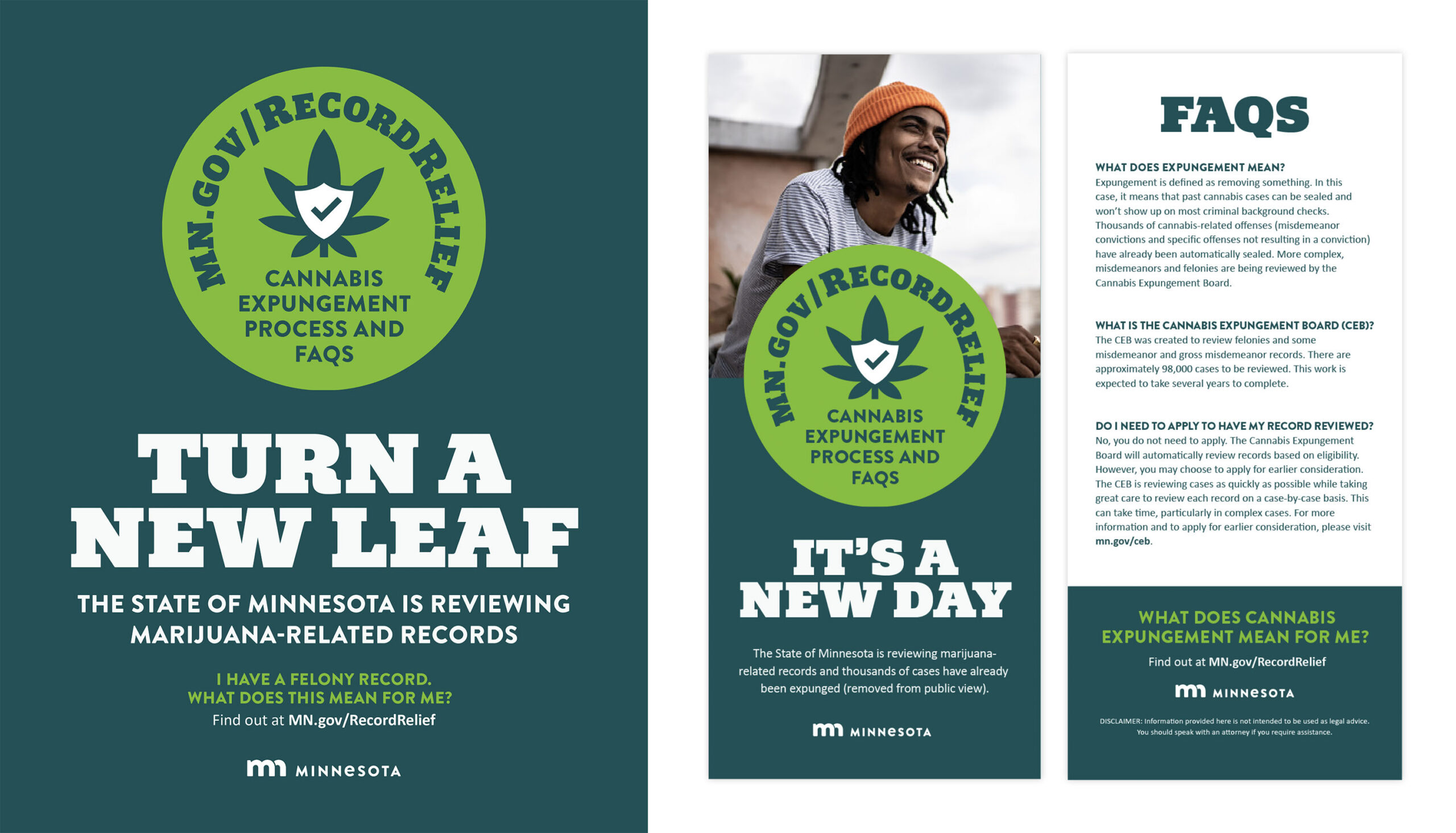
Partnering with the Minnesota Department of Public Safety, Russell Herder was tasked with turning statute into understanding. The work required translating dense government language into communication that was accurate, accessible and actionable—at a statewide scale. That meant clearly explaining the difference between automatic expungements and records requiring review by the Cannabis Expungement Board, outlining realistic timelines, addressing appeal processes and acknowledging immigration considerations without oversimplification or false assurance.
This was not a messaging challenge alone. It was a trust challenge.
From the beginning, the campaign was grounded in research that combined legal expertise with lived experience. Stakeholder interviews surfaced procedural complexity and statutory nuance, while community focus groups revealed skepticism shaped by years of systemic barriers and unmet promises. Those insights shaped a strategy centered on clarity, transparency and respect, recognizing that effective communication is not about persuasion, but about access.
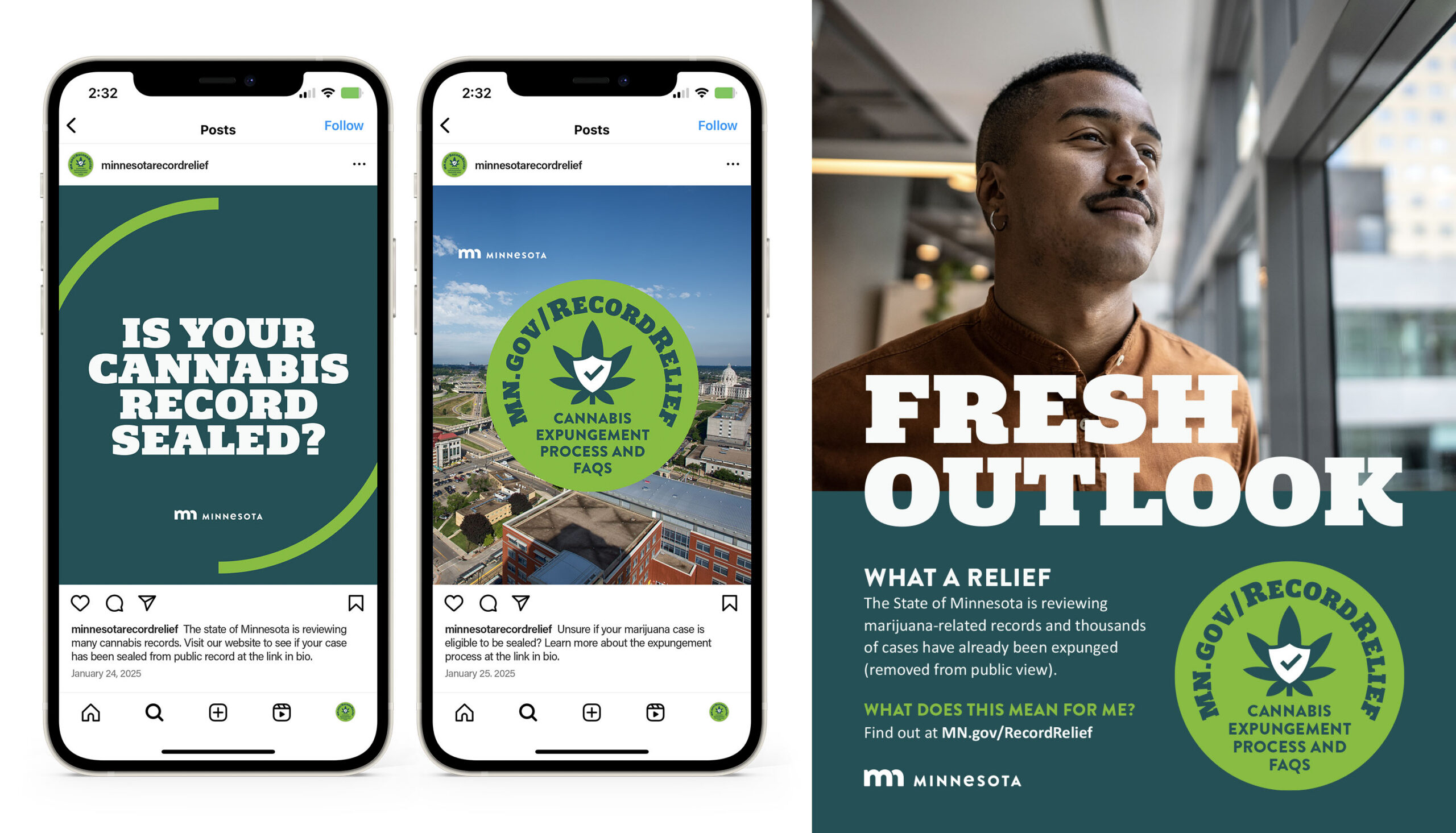
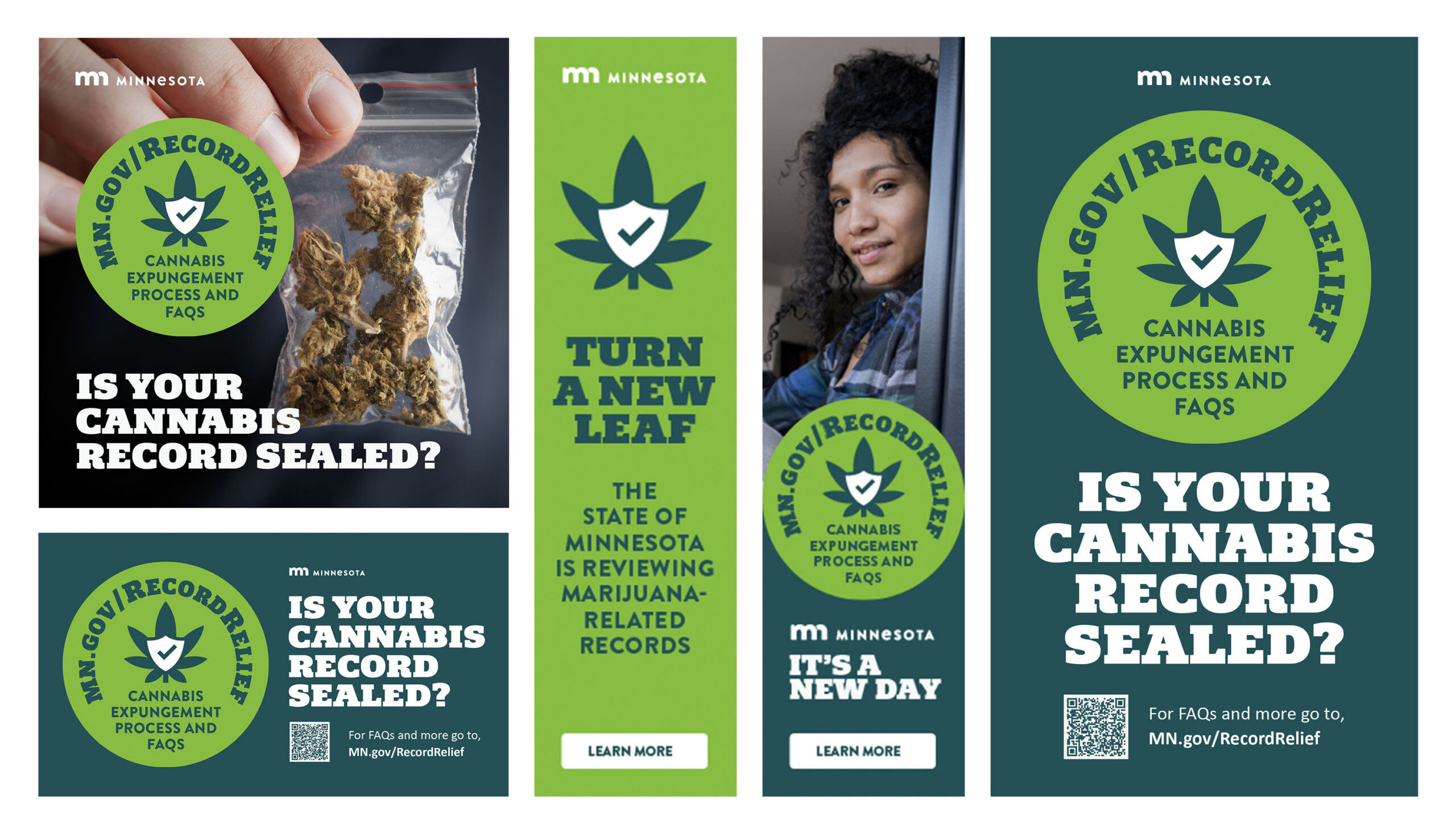
The resulting Record Relief campaign met people where they were. It paired digital advertising and social media with radio, connected TV and place-based materials distributed through trusted community spaces across Minnesota. Information was delivered in English, Spanish, Hmong and Somali, supported by culturally specific creative that reflected the communities most impacted by cannabis criminalization. Community organizations were equipped with toolkits that enabled them to share accurate information through credible local relationships rather than relying solely on top-down messaging.
More than 57,000 misdemeanor records were automatically sealed, while approximately 110,000 felony cases entered a formal review process, each with different implications for individuals seeking to understand their path forward. The campaign’s role was not to promise outcomes, but to make the process visible and navigable.
For stakeholders across government, marketing and policy making, the Cannabis Expungement campaign stands as a reminder of what modern public-sector communication demands. Human-centered strategy is not a design preference; it is a requirement. Multilingual execution is not an add-on; it is foundational. And equity is not achieved through policy alone, but through the clarity and accessibility of the information that allows people to act on it.
In helping Minnesotans understand that a new leaf had turned, our work reinforced a core truth: meaningful change starts when people can see themselves clearly in the systems meant to serve them.