AI has transformed content marketing. Brands can generate copy in seconds, create visuals on demand, and scale campaigns faster than ever. Stock media and generative tools make it easier to keep content calendars full without expanding budgets – but at what cost?
As AI-generated content floods digital channels, audiences are increasingly gravitating toward something harder to automate: human connection.
Consumers are paying attention, too. Research highlighted by Hootsuite found that 62% of consumers would trust or engage less with social content if they knew it was AI-generated. Deloitte research reinforces that trend: 70% of people say generative AI makes information harder to trust, while 68% worry they could be misled or scammed by AI-created content.
That tension is showing up across industries built around audience engagement. In sports, for example, designers recently pushed back publicly on the growing use of AI-generated creative, arguing that while AI can accelerate production, it struggles to replicate emotional connection, cultural nuance, and perspective that makes audiences care.
In a social landscape saturated with polished automation, authenticity is a competitive advantage.
The Content Spectrum: AI, Stock Media, and Human-Created Content
Each content type serves a purpose, but they deliver value differently.
Live and In-Person Content
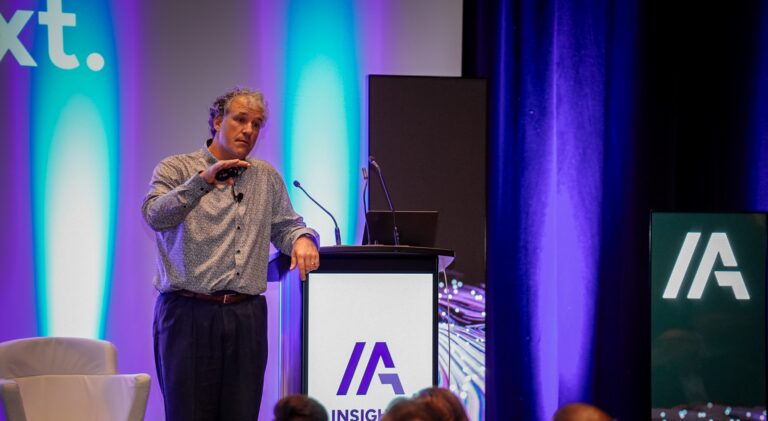
Human-created experiences remain unmatched when it comes to emotional resonance and trust. Real employees, founders, creators, and subject-matter experts create content that feels credible because it reflects lived experience and builds community. Imperfect delivery, unscripted moments, and firsthand insight often outperform highly polished but impersonal posts. Strengths include strong audience trust, emotional connection, and content shareability. This approach can also be more complex and often involves higher production costs as well as longer planning times.
Stock Media
Stock assets provide efficiency and consistency. For companies managing tight deadlines or large content calendars, stock photography and video remain useful tools for due to their low to moderate cost and ease of use. Poorly curated images, however, can feel generic, reducing emotional impact.
AI-Generated Content
AI can be very helpful in brainstorming and initial concepts. The technology performs particularly well in routine or repetitive functions, such as writing product descriptions, data-heavy content, first drafts, ordinary social publishing, and campaign localization.
But AI-generated content introduces challenges marketers cannot ignore.
The Authenticity Gap
Audiences increasingly recognize when content feels machine-generated. When content feels repetitive, emotionally flat, or disconnected from lived experience, trust begins to erode. Consumers engage less when they know content was AI-generated, and local-quality output (or “AI slop”) creates audience frustration and disengagement. In fact, purchase intent actually drops when content feels inauthentic, with over half of individuals reporting they would stop buying from a brand after an inauthentic experience, according to eMarketer. AI can be a real timesaver, but efficiency should not come at the expense of trust.
Humans Still Win
Sure, AI can analyze trends, summarize information, and generate options. What it cannot replicate is lived experience – humor, sarcasm, timing, and cultural moments. AI cannot replace authentic human expression, whether it’s thought leadership grounded in experience, experts sharing original insights, or authentic customer testimonials. Truly impactful engagement is human-powered. The same holds true for cultural awareness, or contextual judgement; this is where people excel.
While perfection has long been the communications standard for brands wanting to be taken seriously, AI has changed the equation. Overnight, a dreaded typo or overt error has become the signature of a human process. Just as personal anecdotes or unscripted moments can communicate authenticity, today, small errors also indicate that there is a real person behind the content.
Connection happens when audiences feel they are hearing from someone—not something.
The Best Strategy Isn’t AI or Human Content. It’s Both.
Rather than treating AI as a replacement for creative teams, successful brands position it as an accelerator. AI can improve workflows, but it is not the brand itself. Leveraging AI to brainstorm ideas, draft first versions, edit content? Great idea. You can quickly identify trends, analyze performance data and lots more.
But use people for highly nuanced work such as developing brand voice, sensitive communication, organizational messaging, thought leadership, or creative direction. AI knows plenty, but people know best.
The Future of Digital Media Is Human
Algorithms will evolve, platforms will change, and AI will continue improving. Brands relying entirely on automation may improve metrics in the short term, but long-term community building depends on something technology cannot reproduce: human connection and lived experience.
Ready to impact your bottom line with human-powered creative direction?
Contact the experts at Russell Herder to learn more.